California Slip and Fall Accident Attorneys
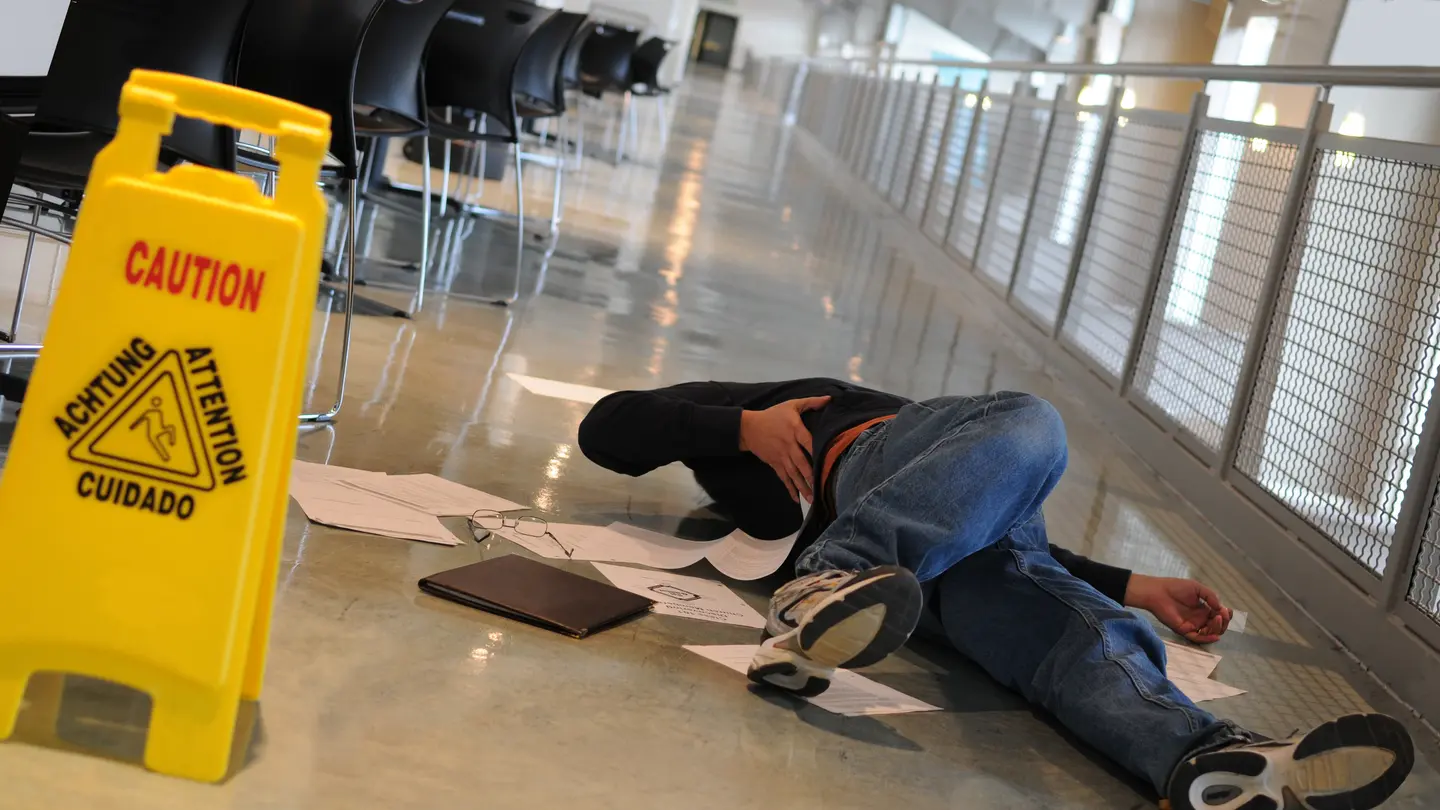
Premises liability claims, commonly referred to as slip-and-fall cases, arise when someone is injured by a dangerous condition on property they do not own. In California, property owners are expected to use reasonable care to keep their property in a safe condition. When they fail to do that, and someone is injured as a result, there may be a claim.
At Oaken Injury Law, we handle slip-and-fall claims with an understanding of how they are defended. Before founding Oaken Injury Law, Matthew Bradley spent years as a trial attorney defending premises liability claims on behalf of property owners, businesses, and insurance companies. The experience he gained gives Oaken Injury Law insight into how these cases are evaluated from the other side, what arguments are commonly raised, and where defendants usually try to create doubt from the beginning.
Why Hire a Slip and Fall Attorney
Many people are unaware that slip and fall claims are very involved and often necessitate proper legal guidance. To the injured person, the facts are simple: a dangerous condition caused them to get injured, and they should be compensated for it. These claims commonly appear open and shut, but that is not always the case.
Many will assume that after sustaining an injury on property other than your own, the owner of that property is responsible. They will believe their claim is straightforward, and even if the property owner does not want to do what is right, the law is in your favor. Unfortunately, even claims that appear at first to be in your favor can still typically be defended aggressively by the defendant. Additionally, the defendant has the legal right to raise several defenses that are not commonly known outside of the field.
Ultimately, all slip and fall cases depend on more than just a dangerous condition; they require determining whether there is the right evidence and if there are supporting facts developed early and correctly.
Evidence and timing often decide whether a slip and fall claim can be proven.
This is why it is important to hire an experienced slip and fall attorney to represent your case. The attorneys at Oaken Injury Law know the right questions to ask and how to properly handle slip and fall cases to deliver the greatest results.
Common Causes of Slip and Fall Accidents
Slip and fall cases can arise in many ways, but one common feature in all of them is the existence of a dangerous condition. The dangerous condition is the thing an injured person can point to as the reason the incident occurred.
Dangerous conditions can arise for a variety of reasons, including a defect that was never repaired. Common examples include:
Walking-surface defects: uneven pavement, broken stairs, torn carpeting, and other unsafe conditions that were allowed to remain on the property.
Floor and lighting hazards: leaking refrigeration or display cases, poor lighting, liquid on the floor from a spill or recent mopping, and missing warning signs.
Obstructions and handrail problems: clutter left in a walkway and loose, missing, or unstable handrails.
In many of these cases, the real issue is not just whether the condition was dangerous. The issue is whether the property owner knew, or should have known, about it and failed to take reasonable steps to fix it or warn about it.
Why Notice and Early Action Matter
A property owner is not automatically responsible every time someone is hurt on their property, even if there is a dangerous condition. In many cases, liability comes down to whether the owner had notice of the dangerous condition before the incident happened. There are two types of notice relevant to a premises liability case: actual notice and constructive notice.
Actual notice: the owner, manager, or employee knew about the dangerous condition. This typically happens in slip and fall incidents when it can be proven that an employee saw a spill and did not clean it up or warn anyone.
Constructive notice: the condition existed long enough that it should have been discovered through reasonable inspection and maintenance. Using the same spill example, constructive notice occurs when a spill has been on the floor long enough that an employee should have discovered and addressed it. Whether the defendant actually knew about the spill does not need to be proven; what matters for constructive notice is whether they should have known about it.
Proving either notice turns on details. Important facts include how long the condition was there, whether inspections by the defendant were being done, whether there were prior complaints, whether surveillance footage exists, and what the maintenance records show. These are often the details that matter most.
Why early action matters: unlike many other areas of personal injury, premises liability cases often require quick investigation to gather evidence before it is lost or destroyed. Unfortunately, evidence of the dangerous condition is often cleaned up before the injured person has even had a chance to gather their thoughts.
Because of that, it is important to act quickly in preserving evidence of the condition. A few ways to collect evidence after a slip and fall are:
- Take photos. If you are physically able, and it is safe to do so, document the area where you fell as best you can. Take as many photos as you can. The goal is not perfection. The goal is to preserve what the scene looked like before it is changed or cleared.
- Identify witnesses. Independent witnesses can play an important role in determining how the incident happened. If there are witnesses, try to obtain their names and contact information.
- Look for surveillance cameras. Video evidence can be extremely valuable in showing how the incident occurred and in proving notice. If you notice cameras, you can request a copy of the footage because surveillance footage is often overwritten after only a few days or weeks.
Compensation for a Slip and Fall Accident
When someone is injured on another person’s property, they may be entitled to a recovery.
Medical expenses, lost wages, and future care
Technically, an injured person could obtain compensation for their medical expenses, pain and suffering, lost wages, and future medical care. However, because the recovery amount is often subjective, it is never guaranteed.
Evidence, notice, and legal defenses
Critical issues such as proving notice, overcoming legal defenses, the necessity of medical treatment, the quality of the evidence, and how clearly fault can be established all play a role in determining the value of a premises liability case.
Protecting the potential recovery
Since slip and fall claims involve thorough and complex investigations, speaking with an attorney as early as possible may help protect both your rights and your potential recovery.
Speak With a Slip and Fall Attorney
Many assume that after sustaining an injury on property other than your own, the owner of that property is responsible. They will believe their claim is straightforward, and even if the property owner does not want to do what is right, the law is in your favor.
In reality, slip and fall claims are very involved and often necessitate proper legal guidance. To the injured person, the facts are simple: a dangerous condition caused them to get injured, and they should be compensated for it. These claims commonly appear open and shut, but that is not always the case.
All slip and fall cases depend on more than just a dangerous condition; they will require determining whether there is the right evidence and if there are supporting facts developed early and correctly.
If you or a family member has been injured on someone else’s property, speaking with an attorney may help clarify whether a claim exists, what evidence should be preserved, and what steps should be taken next.
At Oaken Injury Law, we represent individuals injured in slip and fall, trip and fall, and other premises liability accidents throughout California.